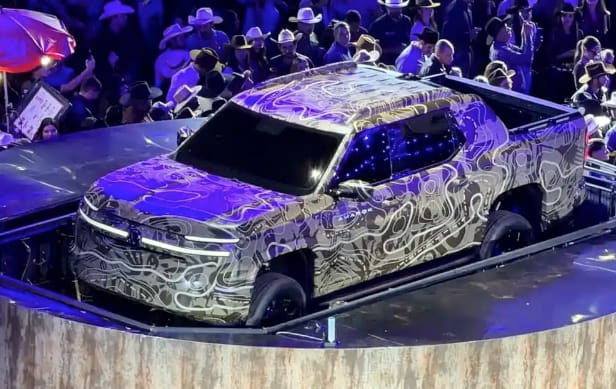
Bidding farewell to diesel engines and boasting over 470 horsepower, the all-new Volkswagen Amarok pickup is based on the Maxus Interstellar X.
We recently learned from official sources that a teaser for the all-new Volkswagen Amarok has been released; the vehicle is currently still clad in artistic camouflage wrap. Born from a collaboration between Volkswagen and SAIC Motor, the new model utilizes a platform derived from the Maxus Star-X (Xingji X). Volkswagen has stated that the suspension, steering, and overall vehicle dynamics were developed and tuned entirely by its own engineering team. The new Amarok is scheduled for launch in 2027 and will be manufactured at the company’s plant in Argentina, positioning it to compete with models such as the Ford Ranger and Mitsubishi Triton.
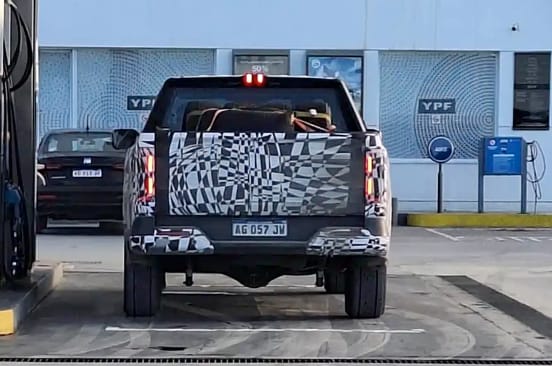
Since production began in 2010, the Argentine plant has produced a total of 800,000 Amarok units, making it the highest-volume model in the plant’s history; over 465,000 of these vehicles have been exported to more than 100 countries and regions worldwide.
In terms of exterior design, the front end retains the high-set hood and broad grille while adopting a unique design language that aligns more closely with Volkswagen’s brand identity. A full-width light strip connecting the headlights and the central brand logo serves as a visual focal point, and the headlight cluster layout differs significantly from the current model. Changes to the vehicle’s profile and rear are relatively limited, focusing primarily on the alloy wheels, badging, and subtle exterior trim details.
While Volkswagen has released few technical details so far, it has confirmed a key piece of information: this will be the most powerful Amarok ever built. It has also been confirmed that the new generation will feature an electrified powertrain. A top-tier “Amarok 800 TSI” version is planned for the future; it is expected to deliver a combined maximum output exceeding 470 horsepower and peak torque of 800 Nm, featuring an all-wheel-drive system and an acceleration time of under 5 seconds for the 0–100 km/h sprint.